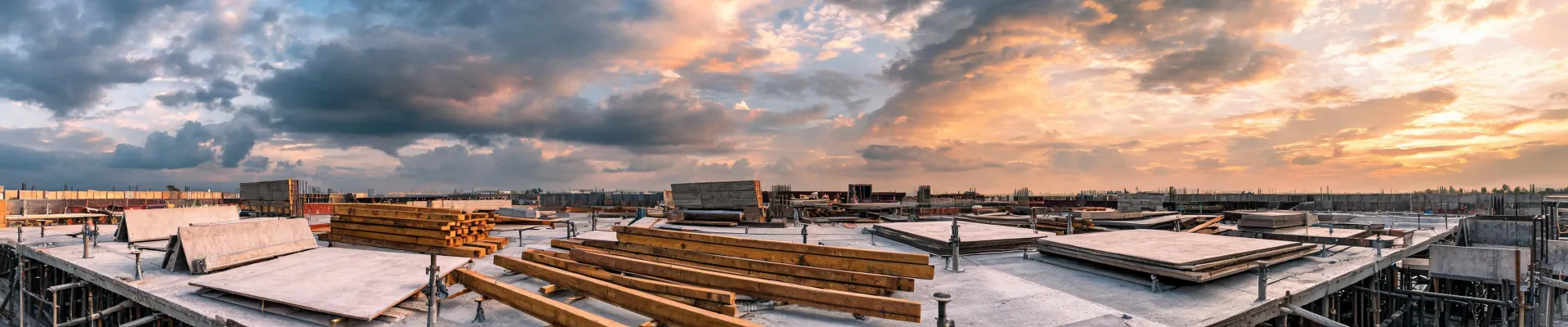
The Call I Didn't See Coming
It was about 4:30 on a Tuesday afternoon when our sales manager forwarded me a voicemail. A contractor in western Pennsylvania had received 30,000 units of shoring equipment that morning—props, tripod bases, U-heads, the whole package. His site engineer had taken one look at the delivery and stopped the offload.
"This isn't what I ordered," he said. "And half of it doesn't match the drawings."
You should know my position first. I'm the quality and brand compliance manager for a formwork and shoring supplier. Every order that goes out of our facility gets checked by me or my team before it reaches a customer. In 2024, we rejected about 4.2% of first-time production samples due to welding defects, coating inconsistencies, or documentation gaps. Not huge, but enough to matter when you're shipping 50,000 pieces a year.
(Should mention: we didn't supply this particular order. The contractor bought from a wholesale broker he found online. He came to us afterward for help—and that's when the story gets interesting.)
The Assumption That Cost Him a Week
Here's what happened. The contractor—let's call him a mid-sized residential and light commercial builder—needed shoring for a series of 5-story concrete structures. Repetitive slabs, typical spans, nothing exotic. He got quotes from two suppliers. One was us. The other was a "wholesale shoring systems supplier" who promised the same load ratings at roughly 30% less.
He went with the lower quote. I'm not blaming him. On paper, it looked like the same thing: adjustable steel props, H20 timber beams, plywood formwork boards. Even the load tables looked similar—40 kN per prop, 800 mm centers on the beams. That was the core of the problem.
He assumed "same specifications" meant identical results across suppliers. Didn't verify. Turned out each brand had slightly different interpretations of what "40 kN capacity" meant in practice.
Honestly, this is the most common thing I see in wholesale formwork buying. People think all shoring is created equal because the numbers look the same. The reality is those numbers are useless without knowing the testing standard, the safety factor, and the condition of the equipment you're actually receiving.
What We Found in the Yard
I went to the site two days later. The rejected equipment was sitting in a fenced area next to the rebar staging. I spent about an hour with a tape measure, a camera, and a checklist. Here's what jumped out at me:
- The steel props came from at least three different manufacturing batches. The outer diameter varied by nearly 1.5 mm between units—enough to affect the telescopic overlap and the effective load rating.
- None of them had the adjustable base plates or U-heads specified in the order. Instead, the broker had substituted flat plates that didn't lock properly onto the prop stems.
- There were no batch test certificates, no EN 1065 marking, and no load documentation beyond a generic table printed in the broker's own format.
- The H20 beams—when we checked the flange condition—had significant wear on the top flange, which compromises the beam's bending resistance even if the web looks fine.
The contractor's first question was, "Okay, but will it hold?"
That's the wrong question. (Not that he knew better at that point.) The right questions are: "What standard was it tested to?" and "Who takes responsibility if it doesn't perform?"
I told him straight: we couldn't approve that equipment for use on concrete formwork. The load paths were uncertain, and the mix of components meant the system behavior was unpredictable. That's not me being precious about tolerances—it's basic engineering. Shoring is not a place to improvise.
The Turning Point
Here's where the story changes. He had a pour scheduled in six days. Reordering the same generic props would take ten to twelve weeks from the same broker (surprise, surprise—the "wholesale price" included "lead time we don't control").
Our team stepped in with a different approach. Instead of selling him "props and beams," we supplied a complete tied shoring package from our Doka system line: props, frames, head jacks, base jacks, coupling pins, and H20 beams—including all the doka formwork accessories that make the system work—compatible with each other, documented with load certificates, and available from stock.
The price was about 18% higher—or rather, 18% higher on the purchase order, but lower on the total installed cost. That distinction matters way more than most buyers realize.
Here's the thing: the site crew had worked with our system before on a previous project. They knew how to assemble it. There was no learning curve. And because every component was designed to work together, the assembly time per floor dropped by about 40% compared to the mixed props they'd planned to use.
We did the math together in the site office. (I should add that the contractor's project manager was skeptical at first—he'd already spent budget approval on the cheaper order.) The higher-priced system actually saved them the cost of the rejected delivery, the demurrage on the rented crane, and roughly nine days of labor on the first two slabs.
He approved the exchange after about an hour.
The Numbers That Matter
Here's what happened over the next two months:
First pour happened on schedule. The slab cycle went from an expected 10-day turnaround to 5.5 days within four floors. That's partly the system, partly a crew that gained confidence. But the shoring system didn't fight them. That matters more than people think.
There were zero unplanned props or wedges added on site. Every component fit. The planned shore spacing worked first time. And when I did a follow-up inspection after the fourth pour, the equipment was in visibly better condition than the batch we'd rejected—because it wasn't being hammered into place.
Now, about the misconception I mentioned earlier: people think expensive vendors deliver better quality. Actually, it's the reverse of what most buyers assume. A supplier who can deliver consistent, tested, compatible equipment can charge more because their products save the contractor time and risk. The causation runs from efficiency to price, not from price to quality.
In this case, the total installed cost per square meter of slab area was about 12% lower with our system than with the "budget" alternative—even though the purchase price was higher. That's the number that matters.
How to Choose Shoring Systems for Wholesale
I've been involved in formwork quality for over four years, and I've reviewed maybe 150+ unique build configurations in that time. From all that, here's what I'd tell anyone buying shoring systems for wholesale—or even just thinking about it:
First, verify the standard. In Europe, adjustable props should meet EN 1065. For falsework and shoring structures, the relevant design standard is EN 12812. A supplier who can't tell you which standard their equipment is certified to is not a supplier—they're a middleman.
Second, check component compatibility against your existing inventory. If you already own props from another manufacturer, will the H20 beams fit the head jacks? Will the scaffold frames connect to the tie rods? This is where "system formwork" earns its keep—the components are designed as a system, not as individual parts. A reputable scaffolding manufacturer or formwork accessories supplier should be able to provide compatibility drawings, not just a price list.
Third, ask for batch documentation. Each delivery should come with test certificates and a batch number. Not a generic brochure—an actual certificate. If they hesitate, that's a red flag.
Fourth, think about lead time and stock. Wholesale buying often fails on delivery, not on price. Ask what's in stock today. Our best inventory position in 2024 was good enough to ship 12-frame shoring towers and 500 H20 beams within a week. That kind of availability has saved more than one contractor's schedule.
The cheapest prop per unit will not be the cheapest per square meter of slab. Factor in labor hours, crane time, rejections, and the cost of one site delay.
And there's a direct cost to delays: the contractor in this story estimated a single day of downtime on his project at roughly $3,500 in liquidated damages and idle equipment. Nine days of delay would have wiped out any savings from the cheaper quote—twice over.
Finally, trust experience over promises. Talk to a supplier about the specific geometry of your structure. A good formwork technical team will ask about slab thickness, shore spacing, pour rate, and concrete temperature. If they only ask "how many do you need?", that's a bad sign.
Lessons Wrapped in a Cautionary Tale
The contractor ended up selling the rejected units to a used equipment dealer at about 40% of what he paid. Add that loss to the week of site downtime, the crane demurrage, and the second round of engineering review, and the "cheap" order cost about the same as buying new system formwork from the start. Without the headache.
I learned something from this too. We assumed the contractor would review the load documentation himself. He didn't—no ordinary wholesale buyer does. That's why we now include a one-page "quality verification" summary with every quote. It lists the relevant standards, the batch certificate reference, and the contact person for technical review. It's a small thing, but it helps the right customers recognize the difference.
Take it from someone who has rejected 8,000 units in a single batch (that was a different story): when you buy shoring systems in bulk, you're not buying steel and timber. You're buying certainty. And certainty is a lot more expensive to retrofit than it is to specify upfront.