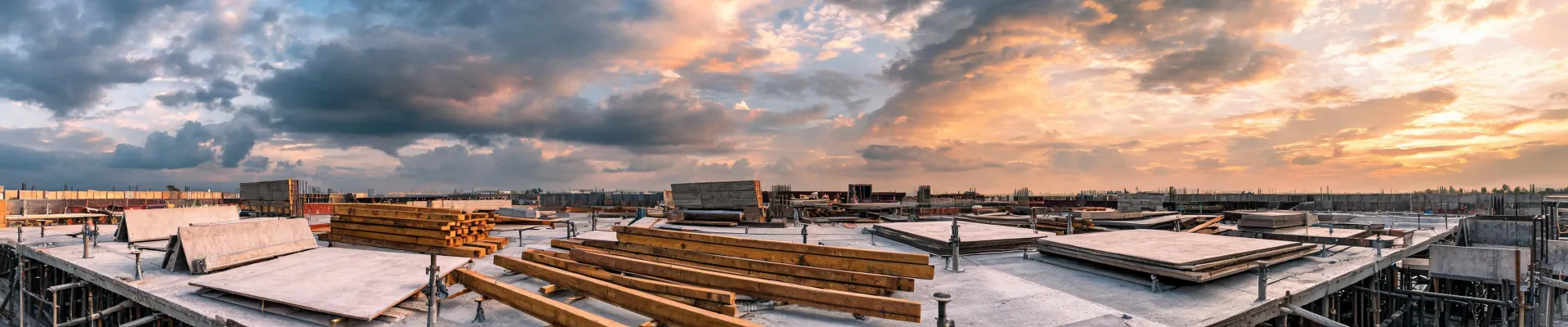
Back in March 2024, I was sure I had the whole formwork procurement thing figured out. Six years of managing our company's buying, $180k+ in tracked orders, and a cost-tracking spreadsheet that would make an auditor smile. Then a 12-story mixed-use project taught me just how wrong I was.
Here's where I started: with the assumption that the lowest priced quote was the smartest buy. It's an easy mistake to make when you're measured on budget variance. My first instinct, like most buyers, was to turn the quotes into a simple comparison table and pick the lowest number.
The project was a new mixed-use building in a tight downtown site. Concrete frame, twelve stories, two levels of below-grade parking. The formwork package would cover about 24 large pours and a bunch of tricky beam-box connections. I estimated we'd purchase or rent around $185,000 worth of formwork, shoring, and scaffolding.
We sent out an RFQ to four suppliers. Three came back with serious bids. The local steel fabricator's number was 22% lower than Doka's initial quote. If I had just looked at line items, I would have signed right there. But something didn't sit right.
The Detail That Saved Us
Our senior project engineer pulled me aside after the pre-bid meeting. "What cycle time are you planning for?" he asked. The steel vendor's proposal said six days per deck. The Doka team said four. With 24 pours, that was a potential 48 days of schedule difference. On a project with a $12,000/day trailer and crane cost, that gap alone was worth over half a million dollars in soft costs.
And then he asked the question that broke my spreadsheet: "How many of the steel package components are actual system components, and how many are loose H20 beams and pipe props you'll have to coordinate yourself?"
I checked the submittal. The steel quote listed a lot of fabricated panels, but the tie-ins, shoring frames, and accessories were mostly separate line items with short descriptions. No load charts. No assembly sequence. No engineering review. It was, at best, a component order wearing a system's clothes. "Look," he said, "this is like trying to match a Pantone color without a calibrated press. It can't be done."
Building the Total Cost Model
I spent the next weekend rebuilding my comparison from scratch. I included:
- Cycle time impact on crane and crew costs
- Accessory compatibility: could we use Doka formwork accessories with the steel panels, or would we need adapters?
- Replacement part availability for the H20 beams and pipe components
- On-site technical support and load table documentation
The result surprised me. Even though Doka's purchase price was higher, the total cost per square meter of contact area came out roughly 9% lower. The system's consistent connection grid cut setup and stripping time. The accessories, especially the H20 beams and pipe components, matched the shoring frames without custom adapters. And the documentation made inspections faster.
So we went with Doka formwork. That part worked. Then in week fourteen, I almost undid the whole thing.
The Baker Scaffold Incident
We needed six 6-foot baker scaffolds for the MEP rough-in. The foreman, trying to save time, placed an order with the same low-cost vendor we had turned down for the formwork. It seemed like a simple product. How hard could it be to buy a baker scaffold?
The scaffolds showed up with guardrails that didn't meet OSHA 29 CFR 1926 Subpart L. The top rail was 1/16 of an inch too thin. I know that sounds minor, but in an audit, it's a violation. We sent the whole delivery back and waited three days for the correct units. The job lost two days of MEP productivity, and the cost of that backtracking was more than the scaffold price difference.
The irony stung. I had spent two weeks working out a total cost model for formwork, then almost let a forty-year-old "just buy cheap" instinct control the scaffolding purchase.
We found a local shoring systems distributor who happened to carry Doka and a few other engineered lines. The first thing they asked was: "Do you have a scaffolding specification guide for this site?" They wanted to confirm duty rating, plank certification, tie-in requirements, and whether the baker scaffolds were meant for light duty or heavy duty. It was a completely different conversation.
What Changed After That
We now start every bid package with a specification review. No purchase order for structural equipment goes out without a load chart or a manufacturer's spec sheet. It's a simple rule, and it came from a stupid mistake.
We also changed our vendor evaluation. A supplier that can't explain why a product meets the spec is a supplier who's guessing. The next time you're comparing alternatives, ask them about the details: How does your shoring tie into the formwork? What's the certified load for this frame? Can you show me the engineering sign-off?
Price matters. But it matters last.
The Honest Catch
I want to be honest about something: Doka isn't the right answer for every job. If you're doing a small renovation or a highly irregular architectural concrete feature, traditional timber formwork might be simpler and cheaper. Doka's system shines on repetitive slabs, columns, and walls where cycle speed and labor productivity matter. If your pour doesn't repeat, you may not need that level of engineering.
A good shoring systems distributor will tell you when their product is too much for the job. That's a red flag when a distributor recommends a full Doka package for everything. Just like a printer who insists you need full Pantone color matching for a black-and-white flyer — they're not advising you, they're selling you.
This analysis is based on pricing and project conditions as of Q2 2024. Formwork costs shift with steel and lumber markets, so verify current rates before committing to a number. My experience is based on roughly 200 mid-range commercial orders over the past six years. If you're working on a different scale or type of construction, your results will differ.
What hasn't changed is the lesson: the cheapest quote is never the cheapest cost. The real price shows up in cycle times, missing accessories, compliance headaches, and the quality of the people behind the product. If your spec is clear and your distributor can prove their numbers, you can make an informed call. That's the only way to buy formwork.